


Schedule an Appointment
Locate and schedule with a Service Officer near you!
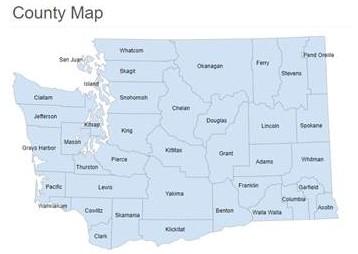
Olympia Service Center
You can schedule an in person or virtual appointment online by clicking here or calling 1-800-562-2308.
Beware!
Unaccredited individuals who prepare, present, or prosecute VA benefit claims, or hold themselves out as being authorized to do so, are in violation of Federal law.
The Service Officers listed in the map above are contracted with the Washington State Department of Veterans Affairs to provide Accredited VA Claims Assistance.
Contact Information
Statistics
Olympia Service Center FY 24-25
Olympia Call Center received approximately 8,646 calls
Visitors 2,335
Claims filed 595
WDVA Field Services Network FY24-25
VA Disability Compensation & Pension Claims Filed: 17,541
Approval Rating: 76%
Income Generated: $313.2 Million
How WDVA Can Help You File a VA Claim
The WDVA Service Center is located in Olympia, WA. Within our Service Center we assist veterans and families across the entire state of Washington. We offer in-person and virtual appointments. Our Benefit Specialists will assist you throughout the entirety of the claims process. The Service Center can assist you with filing for benefits such as:
- VA Disability Compensation
- VA Pension or Survivors Pension
- VA Health Care
- Other federal, state, or county benefits
We offer three different appointment types:
- Initial/Follow Up
- VA Claim Filing
- State and Federal Benefits overview (if receiving VA benefits already)
You can schedule an appointment online by clicking here. You can also reach us at 1-800-562-2308 and we can schedule an appointment for you.
Claims Overview
The VA provides disability benefits for veterans whose service caused or worsened a condition. You must have been released under honorable conditions.
Filing a claim is a legal process requiring military records, medical evidence, and other supporting documents.
Working with an accredited Veteran Service Officer (VSO) is strongly recommended. Their help is free, and they guide you through claims and appeals.
WDVA has VSOs across Washington and in tribal communities to assist Veterans, dependents, and survivors.
How to File a Claim
- Step 1: Contact a Service Officer
-
You can find a Service Officer near you by visiting the county map on our website. Your VSO will explain what benefits you may be eligible for and help you create a plan to gather the documents and evidence needed for your claim.
Bring Helpful Documents to Your Appointment (Printable Checklist)
The following documents are not required to file a formal claim but will expedite the process.
If you can, bring:
For ALL appointments: (if available)
- Military discharge documents (DD-214, WD AGO 53-55 [WWII], etc.)
- Marriage certificate, if applicable Dates of all previous marriages/divorces for yourself and your spouse, if applicable
- Birth certificates for all dependent children, if applicable
- Previous VA letters, if available
- Bank name, routing number, and account number for direct deposit, if not already receiving VA benefits
If applying for compensation (disability):
- Service treatment records, if available.
- All National Guard/Reserve treatment records, if available.
- Current VA Healthcare problem list (diagnosis history) showing a diagnosis for the condition(s) claiming, if treatment is received at VHA
- Current non-VA providers diagnosis records showing claimed condition(s)
- Any additional medical records showing continuity of treatment since military service
If applying for non-service connected pension/survivors pension:
- Medical records showing total and permanent disability(s) if under age 65
- Proof of income -- i.e., Social Security Award Letter, retirement letter, any current income
- Proof of net worth -- i.e., bank account statements, IRAs, trusts, property other than home, etc.
- Proof of medical expenses -- i.e., Medicare, private insurance, prescription receipts, in-home/ facility care expenses
- Copy of Veteran’s death certificate
If applying for accrued benefits/dependency and indemnity compensation:
- Previous award letters from VA for Veteran (if available)
- Marriage certificate
- Death certificate
If applying for burial benefits:
- Copy of Veteran’s death certificate
- Funeral/transportation bill
- Itemized contract/receipt showing paid-in-full from funeral home and/or cemetery with claimant’s name on receipt
If you don’t have these records, your VSO can help you request them.
- Step 2: Gather evidence and build your Claim together with your VSO
-
To receive VA disability benefits, you must provide evidence that supports your claim. In most cases, you’ll need to show three things:
- You served in the U.S. Armed Forces
- You have a current disability
- Your disability was caused by, or made worse during, your military service
Evidence can include:
- military service records,
- medical records, or
- written statements from people who know what happened or how your condition affects you. These personal statements are often called “buddy letters.”
Your disability evaluation is based on the evidence you submit and the results of your Compensation & Pension (C&P) exam. Because the VA uses this information to make a decision, it’s important that everything you provide is accurate and complete. Your Service Officer will help you gather and organize this information.
Some claims may qualify for faster processing through the VA’s Fully Developed Claim program if all necessary evidence is submitted upfront.
When you file a claim with help from a Service Officer, you will sign a VA Appointment of Representation form. This allows your VSO to officially act on your behalf when preparing and submitting your claim. - Step 3: Attend the required VA Compensation and Pension Exam
-
After your claim is filed, the VA may schedule a Compensation & Pension (C&P) exam. This exam helps document the current impact of your condition.
What to Expect at the VA Exam
To approve your claim, the VA must confirm that your disability is currently affecting your health. This usually happens during a Compensation and Pension (C&P) exam or, in some cases, an Acceptable Clinical Evidence (ACE) review. The VA will schedule your exam and let you know the date, time, and location.
A C&P exam typically includes a physical exam focused on the area related to your disability. Depending on your condition, it may also involve tests such as lab work, X-rays, or other diagnostics. The examiner’s job is to create a clear picture of how your disability impacts you right now.
After your exam, the examiner prepares a medical report and sends it to the VA. The VA uses this report, along with the evidence you provided, to make a decision on your claim.
- Step 4: Receive your Decision
-
A Federal VA rater will be assigned to review your claim and evidence.
If approved, the VA will assign a disability rating from 0 to 100 percent based on how severe your conditions are.
You will get a decision letter by mail. You can also check your claim status at VA.gov.
- Step 5: Meet with your Service Officer to review the decision letter
-
Whether your claim is approved or denied, reviewing the decision with your VSO is important. They can help you understand the results, next steps, and any additional state or local benefits you may now qualify for.
If Your Claim Is Denied
If you disagree with the VA’s decision, you have options. You should meet with your VSO to determine what next steps are available to you. Appeals must be filed within one year of the date on your decision letter.
You can appeal in one of three ways:
- Option 1: Supplemental Claim
-
You submit new and relevant evidence—information the VA did not previously have, and that could help prove part of your case.
This evidence can be provided through your VSO, or you can ask the VA to gather records from a VA Medical Center, another federal agency, or your private health provider.
The VA will not accept a Supplemental Claim unless new and relevant evidence is included.
The VA’s goal for deciding Supplemental Claims is about 125 days. - Option 2: Higher‑Level Review
-
A more experienced VA review specialist takes a second fresh look at your claim using the evidence already on file.
You cannot add new evidence at this stage.
You may request a one‑time phone call with the reviewer to talk through the previous decision.
The VA’s goal for Higher‑Level Reviews is also about 125 days. - Option 3: Board Appeal
-
Your case is reviewed by a Veterans Law Judge at the Board of Veterans’ Appeals (BVA).
You can choose one of three review options:
- Direct Docket: No new evidence, no hearing. Estimated processing time is about one year.
- Evidence‑Only Docket: You may submit new evidence for 90 days after filing your appeal. This option takes more than one year.
- Hearing Docket: You may request a hearing with a Veterans Law Judge. After the hearing, you have 90 days to submit additional evidence.
Virtual hearings and video hearings are available.
In‑person hearings currently have a wait time of 3–4 years.After reviewing your case, the judge may approve or deny each issue, or send your case back to the VA regional office to gather more information.
- If You Still Don’t Agree with the Decision
-
If you disagree with the outcome of your appeal, talk with your VSO about your next steps.
Depending on the situation, you may:- File another Supplemental Claim with new and relevant evidence
- Request a Higher‑Level Review of a Supplemental Claim decision
- File a Board Appeal (Notice of Disagreement)
- Appeal a Board decision to the U.S. Court of Appeals for Veterans Claims (CAVC)
You have 120 days from the date of the Board’s decision to appeal to the CAVC.
Board decisions cannot be reviewed through a Higher‑Level Review.